
6 min and 41 sec to read, 1669 words
Introduction
Aerospace CNC machined parts are the backbone of modern flight systems, offering unmatched precision and dependability in critical applications. Struggling with product inconsistencies, missed tolerances, and long lead times? Here’s the fix—industry-leading CNC technology delivers parts with accuracy, efficiency, and compliance that aerospace demands. Here’s the deal: with FYMold’s aerospace CNC machined parts , you get tight tolerances, premium materials, and feedback from aviation customers worldwide.
Typical Scenario – Real Problem, Frustration, and Solution
Imagine a leading aerospace supplier in a rush for an urgent prototype. The wrong parts arrive—holes are misaligned, dimensions are off by millimeters, and timelines are wrecked. Quality teams get frustrated, costs mount, and customer trust takes a nosedive. But what’s the real story? Advanced CNC machining and partnerships with trusted experts like FYMold shift the paradigm—minimizing risks and building confidence with every batch.
1. How Do Aerospace CNC Machined Parts Power Modern Aviation?

Aerospace CNC machined parts directly enable the safe and reliable performance of aircraft by forming every essential component with pinpoint accuracy. These include engine housings, landing gear components, control surfaces, and more. When you source aerospace CNC machined parts , you’re choosing precision-crafted products trusted by leaders in flight.
What’s next? Let’s break down exactly where precision counts in aviation.
Which Aerospace Components Rely Most on Precision CNC Machining?
Precision matters most in engine parts, structural frames, turbine blades, and flight control assemblies. A single defect can compromise safety. That’s non-negotiable.
- Engine housings, blades, rotors
- Fasteners, brackets, and casings
- Airframe joiners and actuator parts
Ready for the good part? Companies like those at FYMold provide real-time feedback and detailed inspection reports, helping you stay compliant.
What Makes Aerospace CNC Machined Parts So Demanding?
- Stringent quality controls (AS9100/ISO certifications)
- Difficult-to-machine alloys (Titanium, Inconel)
- Complex geometries and demanding surface finishes
Here’s the kicker: Shortcuts aren’t tolerated—the reliability of the whole aircraft is on the line.
Key Takeaway
If you require reliability, safety, and certification—precision in aerospace CNC machined parts makes all the difference.
| Application | Key Requirement | Example Material | |
|---|---|---|---|
| Engine Housings | Tight Tolerance | Titanium Alloy | |
| Structural Frames | Fatigue Strength | Aluminum Alloy | |
| Landing Gear | Shock Load | Stainless Steel |
Parts above require tight checks for every batch. That extra diligence safeguards both investment and human lives.
2. Why Is CNC Machining the Preferred Choice for Aerospace Components?
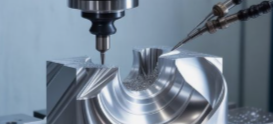
CNC machining is unrivaled in producing intricate geometries, repeatability, and rapid manufacturing for aerospace CNC machined parts. It can handle tough metals, produces ultra-fine features, and ensures traceability—everything regulators expect for flight hardware.
What’s the catch? Manual manufacturing falls short; automation is the only path forward in today’s market.
Where Does CNC Machining Excel Over Other Manufacturing Approaches?
- Achieves micron-level tolerance and consistency
- Adapts quickly to design changes—prototyping through low-volume production
- Guarantees full traceability for compliance audits
You’ll find the biggest difference in yield, speed, and warranty certainty. You might be wondering: can this support fast-paced aerospace projects? Absolutely, especially with aerospace CNC machined parts from a supplier who knows your targets.
What Are the Cost and Time Benefits of CNC for Aerospace?
- No tooling fees for prototypes or short runs
- Consistency reduces post-processing rework
- Scalable runs without upfront mold investment
But wait—there’s more: Reduced part costs create a buffer for R&D budgets.
Key Takeaway
Switching to aerospace CNC machined parts boosts your team’s efficiency and reliability over every iteration.
| Method | Lead Time | Tolerance | Tooling Cost | |
|---|---|---|---|---|
| CNC Machining | 1–10 days | ±0.01 mm | Minimal | |
| Casting (Prototypes) | 3–6 weeks | ±0.10 mm | High | |
| Manual Fabrication | Days–Weeks | ±0.50 mm | Minimal |
Rapid CNC reduces waiting. The faster you move, the sooner you can test, deliver, and win contracts.
3. Which Materials are Most Commonly Used in Aerospace CNC Machined Parts?
Aerospace CNC machined parts use advanced alloys engineered for light weight, strength, and corrosion resistance. Titanium and aluminum alloys remain top picks, but high-performance plastics and superalloys play vital roles for specialized mission profiles.
Here’s something most suppliers won’t tell you: not every CNC shop can handle exotic materials. Choose carefully!
What’s the Reason Behind Specific Material Choices in Aerospace?
Aerospace requires materials that resist fatigue, temperature extremes, and chemical attack.
- Aluminum for lightweight structures
- Titanium for critical fasteners and fatigue-prone zones
- Inconel for turbines facing extreme heat
- High-Performance Plastics for insulation, lightweight panels
Stay with me: Each material selection must align with cost, machinability, and long-term reliability.
How Do Material Properties Affect CNC Part Performance?
- Yield strength impacts part lifespan
- Machinability dictates production cost and lead time
- Corrosion resistance ensures durability in harsh environments
If you skimp on material, expect maintenance headaches. Cutting corners isn’t worth the risk.
Key Takeaway
Selecting optimal materials for aerospace CNC machined parts future-proofs your fleet and minimizes in-service surprises.
| Material | Property | Aerospace Use Example | |
|---|---|---|---|
| Aluminum 7075 | Light, Strong | Wing Ribs | |
| Titanium Ti-6Al-4V | Corrosion Resistant | Engine Mounts | |
| Inconel 718 | Heat Resistant | Turbine Blades | |
| PEEK, PPSU | Low Weight, Insulation | Connectors |
Pick per mission fit. Avoid downtime by testing both raw stock and finished goods.
4. How Do Tolerances and Surface Finishes Impact Aerospace CNC Machined Parts?
Tight tolerances and immaculate surface finishes elevate the performance and reliability of aerospace CNC machined parts. Why? Even a micron-sized deviation can cause premature wear or, worse, mission failure.
Hold tight: Surface and tolerance specs are never “one size fits all”—every application has unique thresholds.
What’s the Standard for Tolerances and Surface Quality in Aerospace?
Most aerospace parts demand ±0.01 mm or tighter, plus finishes down to Ra 0.2 microns for mating surfaces.
- Turbine rotors: sub-micron flatness
- Sealing faces: ultra-polished, no roughness
- Fastener holes: tight positional tolerances
“Good enough” is never enough in this field.
How Do Inspection Processes Guarantee Every Aerospace CNC Machined Part?
Quality teams rely on advanced metrology: CMMs, optical scanners, and in-situ process controls.
- 3D scanning verifies complex geometries
- Statistical process control (SPC) ensures batch consistency
- First-article inspection reports provide transparent proof
But here’s the kicker: You’ll avoid costly returns and dissatisfied customers with proper inspection—a win-win for all.
Key Takeaway
Never compromise on tolerance or finish for aerospace CNC machined parts ; system reliability starts with quality at the micro level.
| Feature | Typical Tolerance | Surface Finish | Inspection Tool | |
|---|---|---|---|---|
| Sealing Faces | ±0.005 mm | Ra 0.2–0.4 µm | Profilometer | |
| Bearing Bores | ±0.01 mm | Ra 0.4–0.8 µm | CMM/Caliper | |
| Bolt Holes | ±0.02 mm | Ra 0.8–1.6 µm | Optical Scanner |
This vigilance catches minor flaws. Each step ensures only flight-ready goods leave your dock.
5. What Are the Key Challenges in Manufacturing Aerospace CNC Machined Parts?
The biggest challenges in manufacturing aerospace CNC machined parts are material hardness, geometric complexity, and regulatory compliance. Unplanned downtime, scrap rates, and certification audits can drain resources quickly.
Don’t panic! Most issues have solutions with the right engineering and supplier partnerships— FYMold’s resources help you stay out front.
What Difficulties Do Engineers Face in Aerospace CNC Production?
- Machining tough alloys leads to tool wear and slowdowns
- Holding tolerances across large, lightweight assemblies is tricky
- Documenting every process step for compliance audits (AS9100)
Here’s the twist: Adaptable processes and digital twins reduce surprises and speed up fixes.
How Can You Overcome These Manufacturing Obstacles?
Solutions include:
- Precise toolpath simulation
- Real-time machine monitoring and data logging
- Teaming up with suppliers offering pre-certified workflows
- Build supplier relationships early
- Conduct joint reviews with engineering and production
- Use digital quality records for audit-proof traceability
Don’t miss this: Combining expertise with the right technology always wins.
Key Takeaway
Continual investment in skill, tech, and supplier trust is vital for resilient aerospace CNC machined parts production.
| Challenge | Cause | Preventive Action | |
|---|---|---|---|
| Tool Wear | Hard Alloy Machining | High-Quality Tooling | |
| Dimensional Drift | Complex Geometries | In-Process Monitoring | |
| Audit Failures | Incomplete Documentation | Integrated Traceability |
Fixing root causes early prevents headaches down the line.
6. What Are Future Trends and Innovations in Aerospace CNC Machined Parts?
Future aerospace CNC machined parts will get even more efficient through AI-powered process controls, tighter digital twin integration, and additive/CNC hybrid workflows. This means higher throughput, lower costs, and ultra-optimized new designs.
Curious about what’s next? Here’s where industry 4.0 transforms your procurement strategy—FYMold already supports many future-focused clients!
Which Digital and Hybrid Manufacturing Technologies Are Reshaping Aerospace CNC?
- Digital twins for on-the-fly simulation and correction
- 5-axis adaptive toolpaths for intricate 3D geometry
- Hybrid additive+CNC: print then finish for speed and flexibility
This shift delivers faster quote-to-part cycle times and eliminates typical bottlenecks.
How Should You Prepare Your Business for Next-Gen CNC Trends?
- Adopt digital supply chains for instant tracking
- Implement closed-loop QC and part serialization
- Educate teams on new composite and superalloy machining approaches
- Track your digital readiness
- Try hybrid workflows with select high-value SKUs
- Join standards committees for automation best practices
Here’s the clincher: Being first to adopt keeps your team competitive through every tech leap.
Key Takeaway
Digital innovation in aerospace CNC machined parts isn’t optional—it defines tomorrow’s market leaders.
| Emerging Trend | Benefit | Deployment Stage | |
|---|---|---|---|
| AI-Powered Process Control | Reduce Defects, Auto-Tuning | Early Adopters | |
| Additive/CNC Hybrid | Design Freedom, Speed | Pilots Ongoing | |
| Digital Supply Chain | End-to-End Traceability | Scaling Fast |
Jump in early—the payoff will easily outpace the investment.
Conclusion
Aerospace CNC machined parts stand at the intersection of safety, performance, and innovation. You’ve seen how precision engineering, advanced materials, and world-class inspection processes define the industry’s pace. If your business requires certified reliability and quick turnaround, contact us today —our team merges expertise with future-ready tools. With every project, FYMold commits to raising the global standard for CNC in aerospace; your trust, our mission.
FAQ
Q1: Can I request custom finishes for aerospace CNC machined parts? Yes, most providers offer an array of finishes—polishing, anodizing, and coatings—designed to meet application and regulatory needs.
Q2: What’s the best way to select materials for my aerospace CNC parts project? Start by mapping function, environment, and certification needs. Work with a supplier like FYMold to source, test, and qualify materials for your exact scenario.
Q3: How do I know if my supplier meets aerospace standards? Check for certifications such as AS9100/ISO, detailed quality documentation, and robust process audits. A transparent track record means you can proceed with confidence.
Q4: Can I use 3D printing and CNC together for aerospace parts? Yes, hybrid approaches combine design flexibility from additive and tolerances from CNC. This is ideal for prototypes and intricate custom runs.
Q5: What should I do if I encounter manufacturing hiccups or part failures? Immediately document the defect, contact your supplier with clear specs, and initiate a root cause review. Proactive communication helps you solve the problem quickly and maintain quality.